



₹1.89 Lakh Crore Lost to Social Media Scams in 2025, Says Federal Trade Commission
Social media scams caused losses worth ₹1.89 lakh crore globally in 2025, with platforms like Facebook, Instagram, and WhatsApp emerging as major sources of online fraud.
 Prasanth Subramani
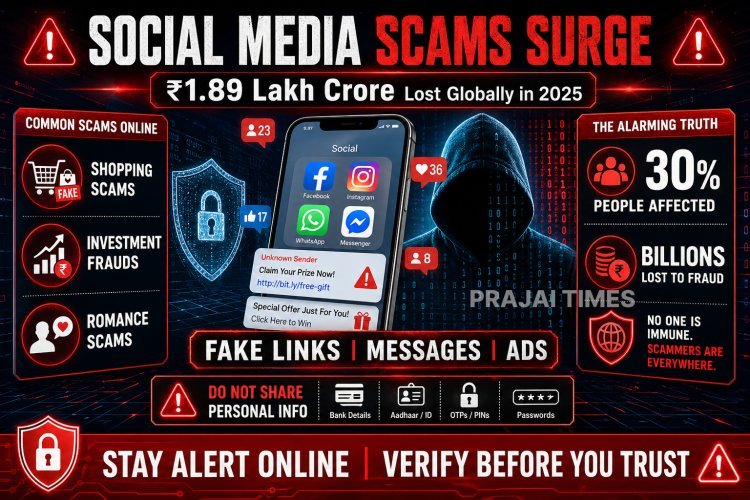

Global losses due to social media scams have reached alarming levels, with reports indicating that nearly ₹1.89 lakh crore (around $2.1 billion) was lost in 2025 alone.
According to data released by the Federal Trade Commission, social media platforms have increasingly become hotspots for online fraud. As the number of users continues to grow worldwide, these platforms are also emerging as major entry points for cybercriminal activities.
The report highlights that nearly 30% of people have lost money through online scams, with platforms like Facebook, Instagram, and WhatsApp frequently linked to such fraud cases.
How Do These Scams Begin?
Most scams are initiated through:
- Fake messages
- Emails
- Suspicious links
- Fraudulent advertisements
In many cases, scammers impersonate known contacts or even hack legitimate social media accounts to gain trust and carry out fraud.
Common Types of Social Media Scams
1. Online Shopping Scams
These are among the most common. Users are attracted by heavily discounted product ads, but end up receiving fake or low-quality items. Fraudulent websites often mimic genuine platforms, making them difficult to identify.
2. Investment Scams
Investment fraud has resulted in losses of over $1.1 billion. Scammers lure victims with promises of quick profits, online trading tips, and fake success stories. Many operate through organized groups and misleading content.
3. Romance Scams
Fraudsters build fake relationships on social media, eventually asking for money under emotional pretexts. These scammers often use fake identities, names, and photos to deceive victims.
Experts warn that online scams are evolving rapidly and have reached peak levels in recent years. Users are advised to remain cautious, verify sources, and avoid clicking on suspicious links or sharing personal information online.