



Canada Develops Biodegradable Battery Made from Tree Pulp That Dissolves Naturally in Soil
Researchers in Canada have developed an innovative biodegradable battery made from tree pulp that can completely decompose in soil without leaving behind toxic waste, offering a sustainable alternative to conventional batteries.
 Prasanth Subramani
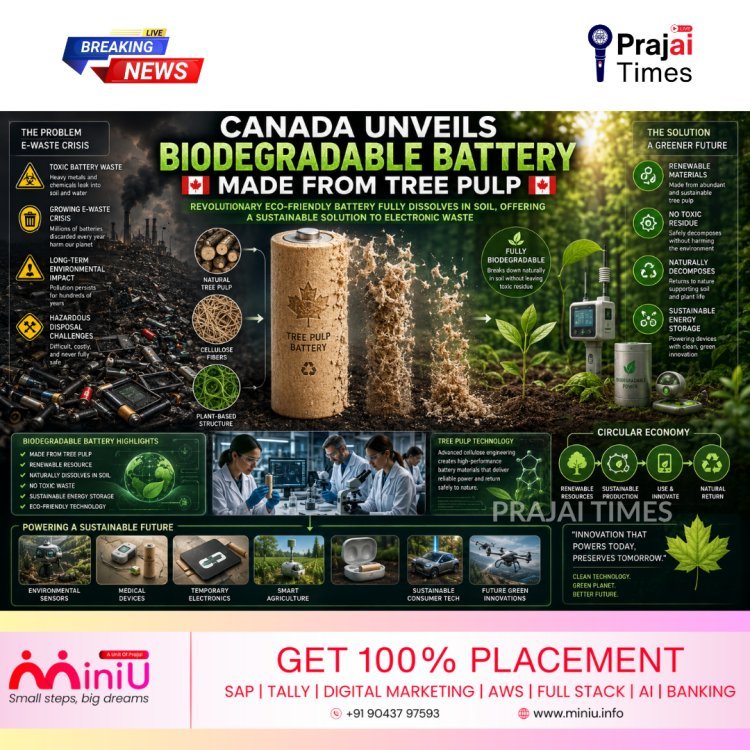

A groundbreaking innovation from Canada could transform the future of energy storage and electronic waste management. Researchers have developed a biodegradable battery made from tree pulp that can naturally dissolve in soil after use, leaving behind no toxic waste.
Traditional batteries contain metals and chemical compounds that often pose environmental risks when improperly disposed of. As electronic waste continues to grow worldwide, scientists have been searching for sustainable alternatives that minimize pollution and reduce the environmental impact of battery disposal.
The newly developed battery uses materials derived from tree pulp, a renewable and biodegradable resource. Unlike conventional batteries that can remain in landfills for years and release harmful substances into the environment, this innovative design is capable of breaking down naturally once discarded.
One of the most remarkable features of the battery is its ability to fully decompose in soil, eliminating concerns about long-term contamination. This makes it particularly attractive for use in temporary electronic devices, environmental sensors, medical applications, and other technologies where sustainable disposal is important.
The development aligns with growing global efforts to create environmentally friendly alternatives for consumer electronics and energy storage systems. As governments and industries seek to reduce carbon footprints and electronic waste, biodegradable batteries could become an important part of the solution.
Experts believe such innovations may help address one of the biggest challenges facing the technology sector: balancing increasing demand for electronic devices with responsible environmental stewardship.
While further testing and large-scale commercialization may still be required, the tree-pulp battery represents a significant step toward cleaner and more sustainable energy technologies. If successfully adopted on a wider scale, it could help reduce battery-related pollution and contribute to a more circular and environmentally responsible economy.
The breakthrough demonstrates how natural materials and scientific innovation can work together to create next-generation technologies that serve both human needs and environmental sustainability.