



Meta Cuts 8,000 Jobs as Company Expands AI Investments
Meta has reportedly laid off around 8,000 employees while increasing investments in artificial intelligence. Engineering and sales teams were among the most affected divisions.
 Prasanth Subramani
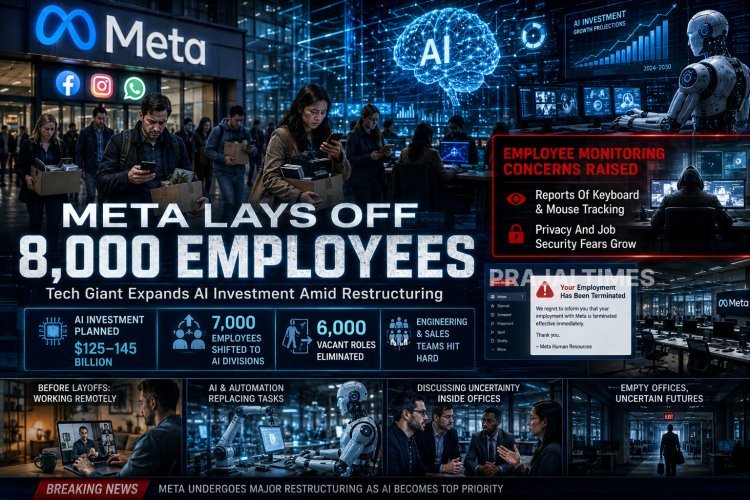

Meta, the parent company of Facebook, Instagram, and WhatsApp, has reportedly laid off around 8,000 employees as part of its ongoing restructuring and cost-cutting measures amid rising investments in artificial intelligence (AI).
Technology companies around the world are increasingly focusing on AI development and investing heavily in the sector. As a result, many firms have begun reducing workforce expenses through large-scale layoffs and restructuring initiatives.
According to reports, Meta plans to invest between 125 billion and 145 billion US dollars in AI-related projects this year.
As part of this latest restructuring move, Meta reportedly instructed many employees to work from home before officially informing them about their termination through email. Employees in the United States and the United Kingdom were reportedly told not to come to the office before receiving layoff notifications.
Reports also stated that some employees in Singapore received termination emails as early as 4 AM local time.
In addition to the layoffs, Meta has reportedly shifted around 7,000 employees to AI-focused divisions and permanently eliminated nearly 6,000 vacant job positions.
The engineering and sales departments were among the most affected by the layoffs.
For the past few days, employees had reportedly been worried about possible job cuts within the company. Reports claimed that some workers began taking office supplies such as free snacks and laptop chargers amid growing uncertainty.
Meanwhile, Meta is also facing criticism over reports that it installed software on employee laptops to monitor keyboard activity and mouse movements. According to reports, the company plans to use such data to help train AI systems capable of automating certain tasks in the future.
Employees and labour groups have reportedly raised concerns and objections regarding these monitoring practices and their implications for workplace privacy and job security.