



Delhi Airport Issues Ebola Advisory for Passengers Arriving From High-Risk African Countries
Delhi’s IGI Airport has issued an Ebola advisory for passengers arriving from Congo, Uganda, and South Sudan, asking symptomatic travellers to report immediately to health officials.
 Prasanth Subramani
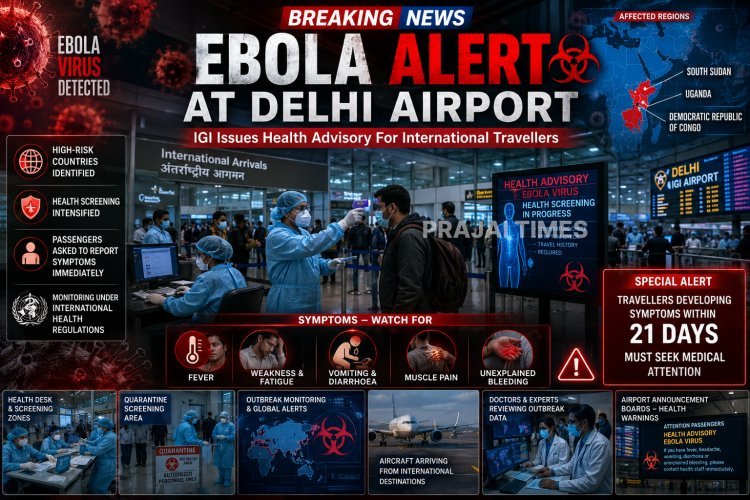

Delhi’s Indira Gandhi International Airport (IGI) has issued a health advisory regarding the Ebola virus, urging passengers arriving from or transiting through affected African countries to immediately report to airport health officials if they experience symptoms.
The advisory comes a day after the Union Health Secretary conducted a high-level review meeting with state authorities to assess India’s preparedness and response measures concerning Ebola Virus Disease (EVD).
IGI Airport identified the Democratic Republic of Congo (DRC), Uganda, and South Sudan as high-risk countries in the latest advisory. Passengers travelling from or through these countries have been asked to remain alert and cooperate with health screening procedures.
According to the advisory, symptoms of Ebola include fever, weakness or fatigue, headache, muscle pain, vomiting, diarrhoea, sore throat, and unexplained bleeding.
Travellers who have had direct contact with blood or bodily fluids of a person suspected or confirmed to have Ebola have also been instructed to immediately report to airport health officers or health desks before completing immigration clearance.
The advisory further stated that any traveller who develops symptoms within 21 days of arrival should seek immediate medical attention and inform healthcare authorities about their recent travel history.
Airport authorities also requested passengers to cooperate with all public health measures and screening protocols in the interest of public safety and compliance with International Health Regulations (IHR).
According to reports, 51 confirmed Ebola cases have been recorded in the Democratic Republic of Congo, although the World Health Organization (WHO) has indicated that the actual scale of the outbreak may be significantly larger.
Ebola Virus Disease is a severe and often fatal illness primarily found in parts of Central Africa. Health authorities state that the virus spreads through direct contact with bodily fluids of infected individuals, contaminated materials, or infected deceased persons.